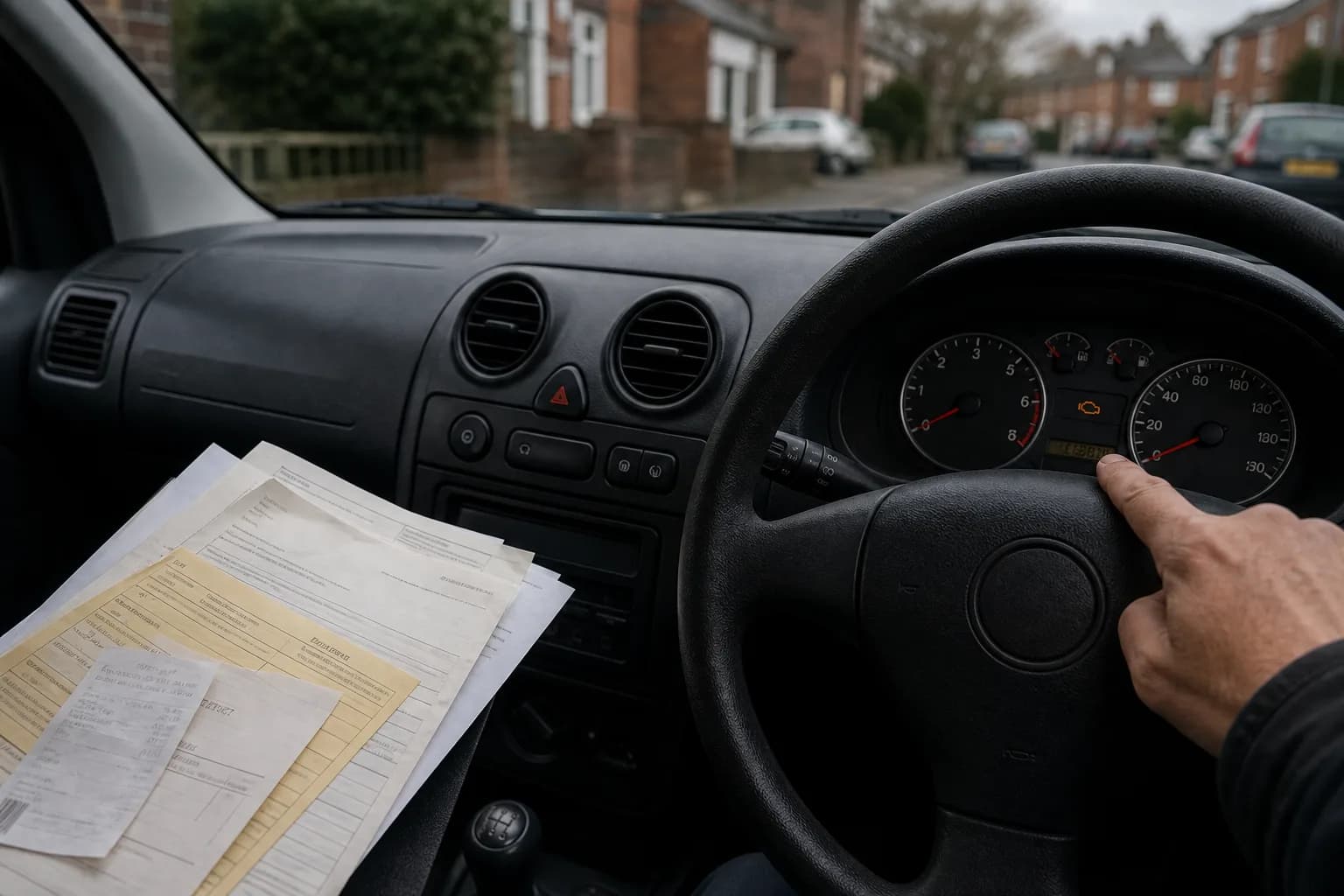
An MOT history is most useful as a timeline. One advisory can be routine wear; the same wording repeated over several tests can suggest that work was deferred. Read the record alongside invoices, mileage and the car's current condition.
What an advisory means
An advisory records something the tester believes should be monitored or may need repair, even though it did not cause the vehicle to fail at that test. It is not a repair quotation and does not predict exactly when a part will fail.
Wording can vary between testers and the visible extent of a defect can change. Use advisories as prompts for inspection, not as a remote diagnosis.
Minor defects
Under the current MOT system, a minor defect has no significant effect on safety or the environment, but should be repaired as soon as possible. A car can pass with minor defects recorded.
Minor and advisory are not interchangeable labels. A minor defect is part of the formal defect categorisation; an advisory is information about an item to monitor or address.
Major defects
A major defect causes an MOT failure. Official guidance describes it as a defect that may affect safety, put other road users at risk, affect the environment, or represent another significant non-compliance.
When a major failure is followed by a pass, ask what was repaired and request the invoice. The pass shows the retested items met the standard at that time; it does not explain the quality or durability of the repair.
Dangerous defects
A dangerous defect is considered a direct and immediate risk to road safety or a serious environmental issue. Official guidance says not to drive until it has been repaired. Treat a dangerous entry seriously even if a later pass exists: understand what failed, who repaired it and whether related damage was assessed.
Why repeated advisories matter
A tyre close to the legal limit may reasonably appear once and then be replaced. The same corrosion, brake, suspension or leak wording over several years can reveal a pattern of monitoring rather than repairing.
Repetition can also reflect broad wording used for different components, so compare dates, axle or side references and invoices carefully. Ask the seller to connect each repeated item with evidence.
Common advisory types
Tyres, brakes, suspension joints, springs, corrosion, lamps and fluid leaks appear frequently because they are wear, exposure or maintenance items. None automatically makes a car a bad purchase. The questions are severity, repetition, repair evidence and whether related wear is visible now.
Uneven tyre wear may point to pressure, alignment, suspension wear or previous damage. A corroded brake pipe may be surface deterioration or may need replacement. Only an inspection can distinguish those situations.
Signs of possible neglect
Look more closely when you see:
- the same safety-related item repeated without invoices;
- a cluster of tyres, brakes and lamps suggesting basic maintenance was delayed;
- long test gaps with no explanation;
- failures immediately before sale followed by no supporting repair paperwork;
- mileage or vehicle details that conflict with the advert;
- advisories dismissed by the seller as “just what testers write”.
A caring owner can still receive advisories. Neglect is inferred from the wider pattern, not one line.
Evidence that work was repaired
The best evidence is a dated invoice naming the vehicle, mileage, components and garage. A new-looking component can support the story but is not enough on its own. If the repair is important, contact the garage using independently sourced details.
The absence of an advisory from the next MOT may mean it was repaired, was no longer visible, or was assessed differently. Do not treat disappearance alone as proof.
Routine versus concerning
A single age-appropriate wear advisory with prompt repair evidence is usually easier to assess than several repeated, unexplained safety items. Concern rises when the seller's claims conflict with the record, the current car still shows the symptom, or the cost and scope cannot be established before purchase.
Use the record to plan the viewing. Inspect relevant tyres, brakes or corrosion areas where safely visible and consider a qualified inspection. An MOT is a legal minimum check at a moment in time, not a full appraisal of reliability or future safety.