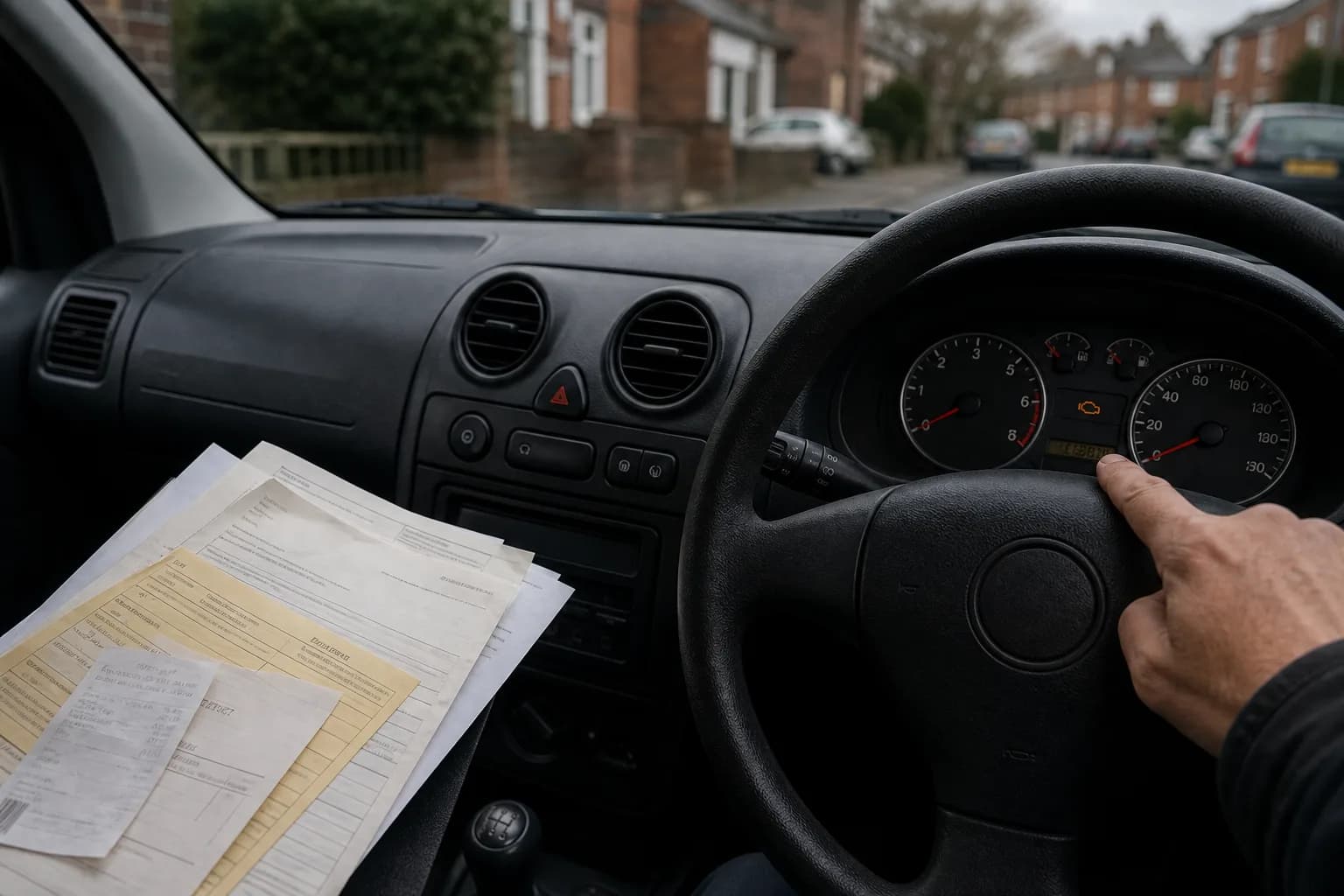
Mileage can conflict for innocent reasons, but it needs an evidence-based explanation. The goal is to reconstruct a coherent timeline from MOT tests, service records, invoices, the current display and the seller's account.
Start with the MOT mileage progression
List every recorded test date and mileage in order. Look for a figure that goes backwards, an implausible jump, a long gap, or a current advert below the last MOT. Check whether the unit shown in the history is miles and whether the vehicle may display kilometres.
One odd digit in a long, otherwise steady sequence often deserves different treatment from several conflicting records.
Normal explanations
A tester can enter a figure incorrectly. Digits may be transposed, a previous reading may be copied, or a display may be misread. Service invoices can also contain typing errors. An isolated error becomes more credible when later records return to a logical progression and supporting paperwork agrees.
Do not “correct” the history yourself. Ask the seller what happened and keep the discrepancy visible in your decision.
Odometer or instrument replacement
An instrument cluster can be replaced after failure or damage. Depending on the vehicle and repair, the new display may be configured to the existing mileage or may start with another figure. Legitimate replacement should leave a paper trail: diagnostic report, invoice, date, old reading and new reading.
Ask which unit was fitted, who programmed it and whether the old unit is available. A verbal claim without dates or mileage does not reconstruct the car's use.
Miles versus kilometres
Imported vehicles and switchable digital displays can create confusion between miles and kilometres. Compare the instrument unit, MOT entries, service records and any import documentation. A rough mathematical relationship can support an explanation, but it does not replace original records.
Confirm which unit the advert uses. Do not assume that a large difference is harmless because somebody mentions kilometres after you challenge it.
When clocking becomes a concern
Concern rises when the present display is below several previous records, wear appears inconsistent with the claimed mileage, service pages are missing around the change, the seller cannot explain who carried out work, or documents appear altered.
No single worn steering wheel or pedal proves clocking. Usage, cleaning, replaced trim and driver habits all affect wear. Use physical signs only as part of the evidence.
Compare the service and invoice trail
Build a second timeline from services, tyres, repairs and parts invoices. Check registration, VIN where present, dates and mileage. Digital manufacturer history may help, but confirm how it was obtained and whether it covers the whole period.
Ask garages to verify crucial entries using contact information found independently. A stamp by itself is easier to reproduce than a matching business record.
Questions for the seller
Ask neutrally and specifically:
- “The mileage recorded on this date is higher than the next reading. What explains that?”
- “Was the instrument cluster or odometer replaced?”
- “Do you have the invoice showing old and new readings?”
- “When did you first notice the discrepancy?”
- “Is the advertised mileage the displayed figure or the believed total mileage?”
Put the answer in writing. A credible seller may not know the full history, but should not invent certainty.
Decide when to walk away
Stop when the seller's explanation changes, documents cannot be matched to the car, a cluster replacement has no usable trail, several records conflict, or the advertised mileage remains misleading after the issue is raised.
A discrepancy does not always mean fraud, but unresolved mileage affects value, maintenance planning and what you can honestly say when selling later. If you cannot establish a reasonable total or history, treat that uncertainty as part of the purchase—not as a detail that will disappear after payment.