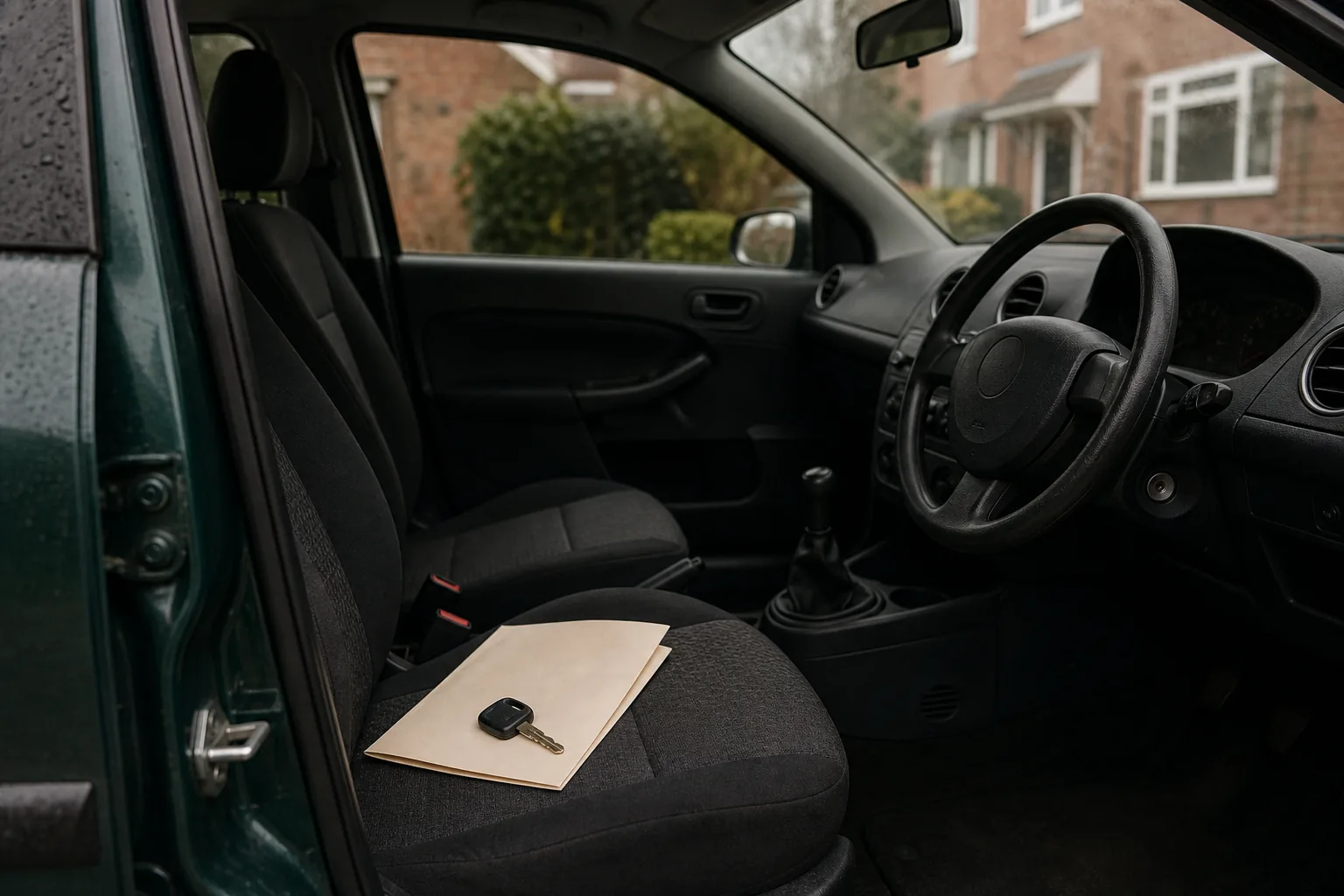
"Sold as seen" is one of the most misunderstood phrases in the UK used car market. Sellers use it to signal "no come-back after purchase." But what does it actually mean in law — and does it really remove all your rights as a buyer?
The Legal Meaning in Private Sales
Your rights depend heavily on whether the seller is genuinely private or acting as a trader. In a private sale, key practical questions include whether the seller has the right to sell the car and whether it matches what they told you. This is general information, not legal advice; rules and remedies can depend on the facts and UK nation involved.
"Sold as seen" does not give a private seller the right to actively misrepresent a car. If a seller tells you the engine runs fine and it does not, that misrepresentation can still give you grounds for a claim, regardless of any "sold as seen" clause. The phrase is intended to limit implied warranties about condition — not to protect outright lies.
In practice, pursuing a private seller through the courts is costly and difficult. "Sold as seen" creates a practical barrier even when it does not create a complete legal one.
Private Sale vs Dealer Sale
The distinction matters enormously. When you buy from a dealer (a business selling cars), the Consumer Rights Act gives you much stronger protections, including the right to reject a car within 30 days if it is not of satisfactory quality, and the right to repair or replacement thereafter.
A dealer cannot hide behind "sold as seen" to the same extent. The Consumer Rights Act implies that goods must be of satisfactory quality, fit for purpose, and as described — and this cannot be contracted away by a disclaimer on an advert. If a dealer sells you a car with a pre-existing fault they did not disclose, you have rights even if the advert said "sold as seen."
The phrase carries more legal weight in a genuine private sale but less in any scenario involving a dealer or trader.
Why Sellers Use the Phrase
Most sellers who add "sold as seen" are not necessarily dishonest. Many do not know exactly what it means legally — they have seen others use it and assume it is standard practice. Some use it because they genuinely do not know the full condition of the car and want to be transparent about that uncertainty.
However, the phrase is also disproportionately common in adverts where the seller is aware of a specific fault and wants to avoid disclosing it. That is the reason Used Car Check flags it as a red flag.
The presence of "sold as seen" should prompt you to ask more questions, not fewer. Ask specifically: "Is there anything wrong with the car that I should know about?" A yes answer — even a vague one — is more useful than a legal disclaimer.
What It Should Make You Do Differently
When you see "sold as seen" in an advert, treat it as a signal to be more thorough, not less.
Use the free GOV.UK MOT history service. Consider a separate vehicle-history check for information such as outstanding finance or insurance history, and ask directly about known faults in writing. A qualified pre-purchase inspection can assess condition in a way database checks cannot.
Do not let the phrase deter you from a car entirely — but do not let a good price override the extra due diligence it calls for. The phrase means the seller is managing their own risk. Make sure you are managing yours.
Summary
Treat “sold as seen” as a reason to document what was said, verify the seller's status and inspect carefully. It is not a complete summary of your rights, and it should never be the only reason you proceed or walk away.