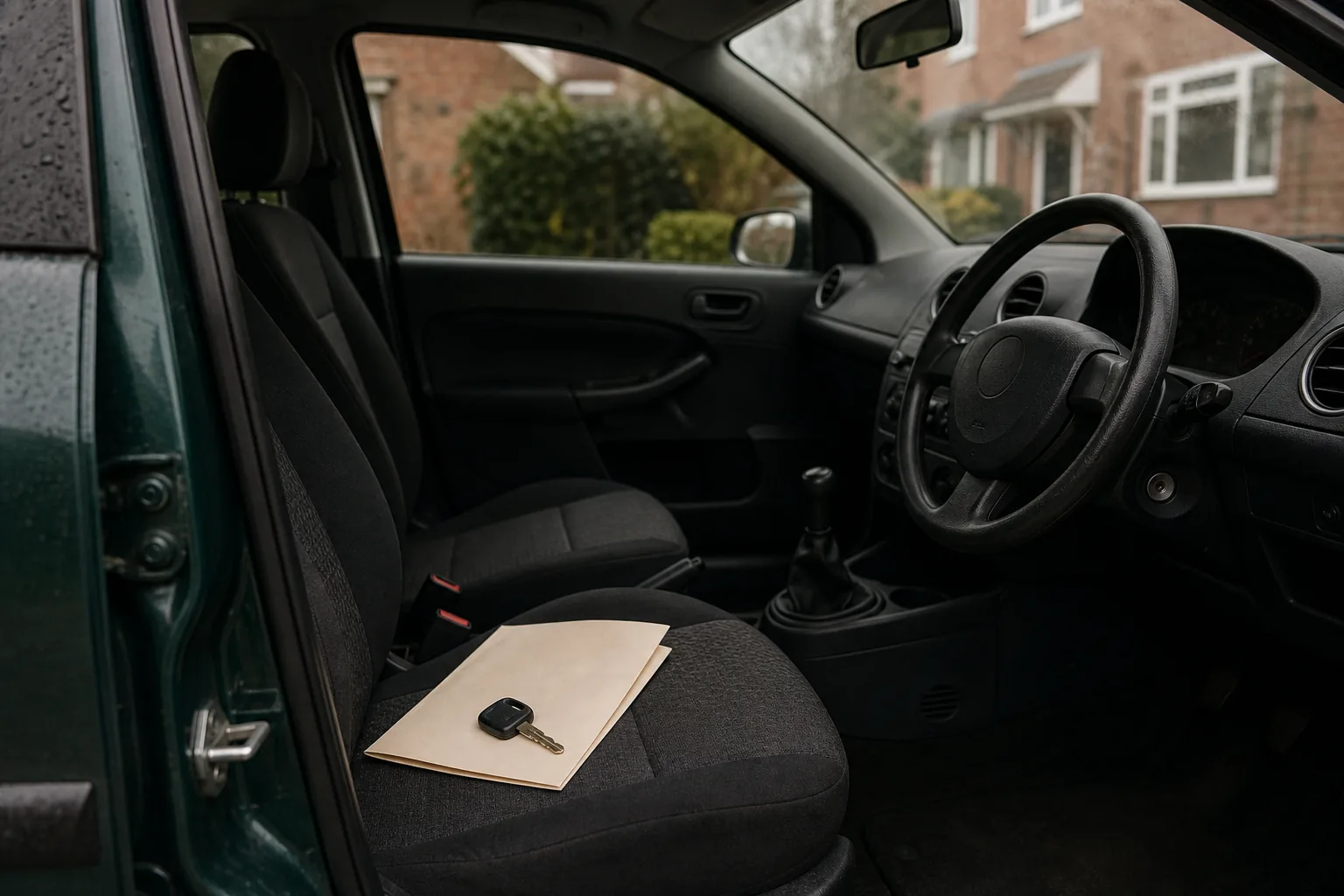
Buying privately can offer more choice and a direct conversation with the person who used the car. It also places more responsibility on you to verify the seller, documents, history and condition. This is practical information, not legal advice.
Private seller or dealer?
Your rights can differ substantially depending on whether the seller is genuinely acting privately or as a business. Look for multiple cars, repeated listing patterns, trade premises, a seller who says every vehicle belongs to a friend, or paperwork showing rapid turnover.
A trader does not become a private seller simply by ticking “private” on a marketplace. If status is unclear, ask directly in writing and keep the response.
Understand the reduced protection
In a genuine private sale, you should not assume the same quality protections that generally apply when buying from a trader. The vehicle should match its description and the seller must have the right to sell it, but resolving a dispute after payment can be difficult.
Statements in the advert and messages matter. Save them. Do not rely on a verbal promise that disappears from the final receipt. For a dispute, obtain current advice from Citizens Advice or a qualified legal professional.
Verify the seller's identity
Arrange the viewing at the seller's home address, ideally the address on the V5C. Ask why if it differs. Meet the named seller, not only a courier, relative or “agent”, and record the seller's full name and address on the receipt.
Do not treat possession of keys as proof of ownership. If the seller says the vehicle belongs to somebody else, speak to that person and verify their authority before continuing.
Check the V5C and VIN
Ask to see the original V5C. Compare the registration, make, model, colour and VIN with the car. Check the VIN in more than one visible location where practical and look for signs that a plate or label has been disturbed.
The V5C is not a service record and not proof of clear finance. Do not accept a photocopy, an application form or a promise that the document is “in the post” as equivalent evidence.
Check history and condition separately
Use the free GOV.UK services for MOT history, tax status and safety recalls. Read mileages and defects chronologically. A separate commercial history check may cover information such as outstanding finance, theft markers or insurance write-offs.
Neither database route tells you the full mechanical condition. Inspect and test the car, or commission a qualified pre-purchase inspection.
Deposits without unnecessary risk
A deposit should not be the price of seeing the car. View and verify first whenever possible. If you choose to leave money, put in writing:
- the vehicle registration and VIN;
- the amount and payment method;
- what the deposit secures;
- the deadline for completion;
- exactly when it is refundable.
Avoid unfamiliar escrow links sent by the seller. Open payment services through your own browser and check the provider independently.
Make the final payment safely
Agree the method before collection. Confirm bank details face to face and check the payee name where your bank provides that service. Be alert if payment is redirected to a different person or account at the last moment.
Both parties should confirm that cleared funds have arrived before the vehicle, keys and documents change hands. A screenshot of a transfer is not proof of receipt.
If outstanding finance is disclosed, contact the finance provider independently and follow a verified settlement process. Do not rely on the seller promising to clear it after receiving all your money.
Create a clear handover record
Use two copies of a receipt with the date and time, buyer and seller details, registration, VIN, displayed mileage, price, payment method, number of keys, documents supplied and any specific statements about faults or condition.
Complete the keeper change through the official DVLA process and keep the green new-keeper information. The buyer must arrange insurance and tax before driving away; vehicle tax does not transfer.
Stop the transaction when checks fail
Walk away if the seller refuses a home viewing without good reason, cannot produce matching identity and vehicle documents, will not allow a proper check, changes payment details unexpectedly, pressures you to pay remotely, or tells a story that conflicts with official records.
You are allowed to stop even after investing time in travel and checks. Sunk time is cheaper than an unverified car.