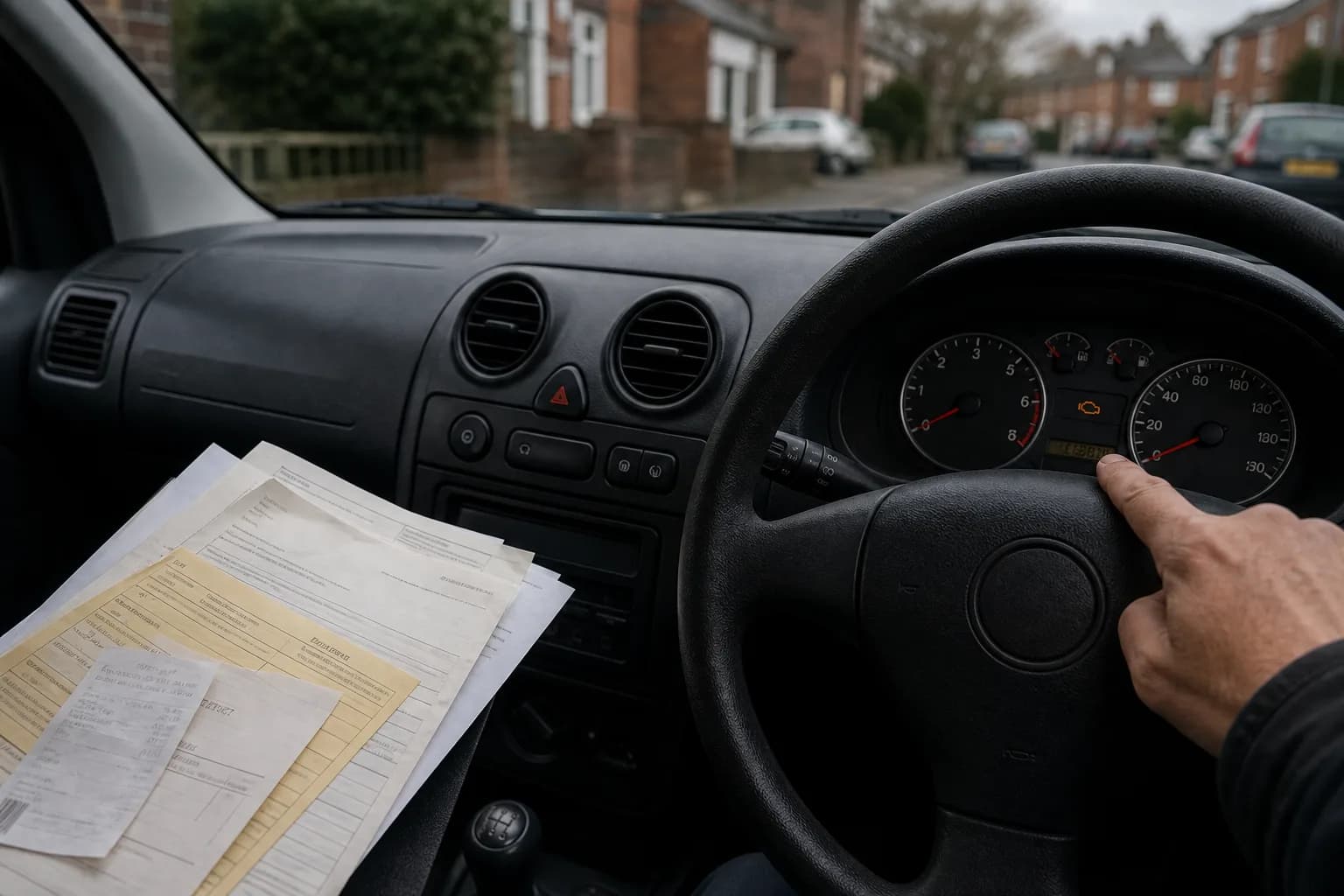
“Full service history” is not a regulated quality grade. In adverts it can mean a stamped book, a set of invoices, a manufacturer digital record, or merely that the seller believes the car was serviced. Verify what exists before treating the phrase as value.
Full, partial and missing history
A useful full history accounts for the servicing expected by time and mileage for that exact vehicle, with credible dates and mileages. Partial history has gaps but still provides some evidence. Missing history means important maintenance cannot be verified, even if the car appears clean.
Do not confuse an MOT record with service history. The MOT checks minimum legal standards for specified items; a service follows a maintenance schedule and can include oil, filters, fluids and inspections outside the MOT.
Stamps, invoices and digital records
A service book is easy to scan but often short on detail. Invoices can show the oil specification, parts and additional work. Digital records may be held by the manufacturer or participating garages and can be strong evidence when retrieved through an official system.
The best file combines these forms. Check that registrations, VINs, dates and mileage agree, and that garage details correspond to real businesses.
Read the timeline, not the pile
Sort the evidence by date. Mark services, MOTs, repairs and changes of keeper. Look for regular progression and investigate periods where mileage grows without a recorded service.
A thick folder can still contain documents for another vehicle or duplicate quotations rather than completed work. Read what each paper actually says.
Version-specific scheduled work
Oil and filter changes are only part of maintenance. Depending on the exact engine and gearbox, a schedule may include a timing belt, gearbox fluid, brake fluid, coolant, spark plugs, fuel filters or hybrid checks.
Confirm requirements from the handbook, manufacturer or a competent specialist using the VIN. Avoid generic claims such as “all belts are every five years” or “all automatics are sealed for life”; arrangements differ.
Gaps and late servicing
A gap may reflect lost paperwork, home servicing, low use or actual neglect. Ask what happened and whether parts receipts, booking records or garage systems can support the explanation. Home maintenance can be competent, but you need enough detail to judge what was done.
Late servicing matters more on some engines and usage patterns than others. It is evidence to weigh, not a remote diagnosis of damage.
Verify important claims
For a crucial timing or gearbox service, look for a dated itemised invoice rather than a handwritten note. Contact the garage using a number found independently, not only the one printed on a questionable document. Ask whether it can confirm the vehicle, date, mileage and work—not the previous owner's personal information.
What history cannot prove
A complete file does not prove that every service was performed well, that the car was never abused, or that a component will not fail. It does make maintenance claims more testable and helps a mechanic interpret the car.
Combine history with a cold start, test drive, MOT timeline, recall check and physical inspection. If the advert promised full history but significant records do not exist, ask the seller to correct the description and decide whether the remaining uncertainty is acceptable.